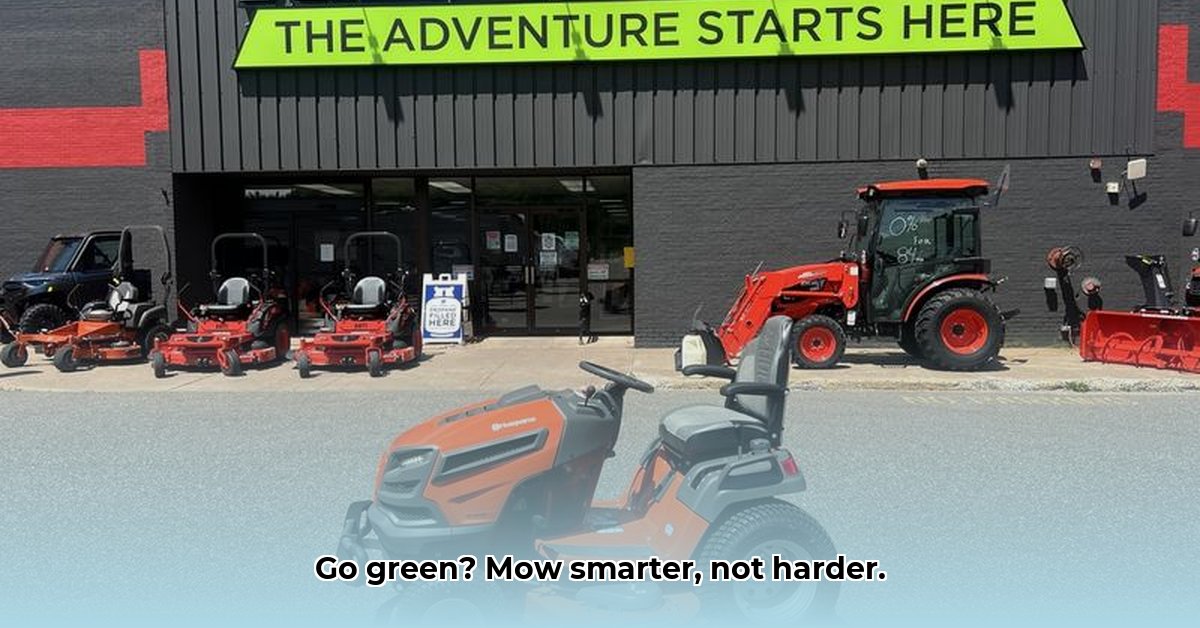
Lawn Tractor Husqvarna: Mowing Your Way to a Greener Lawn
Let's be honest: a perfectly manicured lawn is a source of pride. But achieving that pristine look shouldn't come at the expense of the planet. This guide explores how to choose a Husqvarna lawn tractor that balances power with eco-consciousness, minimizing your environmental impact while creating a beautiful yard. We’ll delve into choosing the right model, understanding the sustainability implications of different engine types, and mastering the art of mower maintenance. For Husqvarna belt diagrams, check out this helpful resource: Husqvarna Belt Diagrams.
Understanding Your Lawn's Needs: It's More Than Just Grass
Before considering engine types or cutting widths, understand your lawn's specific requirements. This ensures you select a mower that’s both effective and efficient. What factors should you prioritize?
Yard Size: A small yard might be perfectly managed with a smaller machine, while a large property necessitates the power and cutting width of a larger riding mower. Do you have a compact garden, or expansive acreage? This significantly impacts your mower choice.
Mowing Frequency: Weekly mowing demands efficiency, while less frequent cutting might allow for a less user-friendly, but potentially more powerful machine. How often are you tackling this task? This factor influences the necessity of features like battery runtime (for electric models).
Your Lifestyle: Will you be the primary user, or will it be used by various members of your family or a professional landscaper? This informs the need for a model that is easy-to-use for multiple individuals or robust enough for daily heavy use. Will it be a weekend chore, or a daily job?
Budget: Remember that the initial cost is only one part of the equation. Factor in ongoing fuel, maintenance, and potential repair costs to get a realistic picture of Total Cost of Ownership (TCO). How much are you willing to invest? Remember to account for long-term costs.
Exploring Husqvarna Lawn Tractors: Power and Sustainability
Husqvarna provides a diverse range of riding mowers, each engineered for durability and efficiency. However, the sheer number of options can be daunting. This comparison table helps you begin your evaluation.
| Model Type | Engine Type | Cutting Width (inches) | Battery Runtime (hours, electric) | Pros | Cons |
|---|---|---|---|---|---|
| Gasoline-powered Lawn Tractor | Gasoline | 42-54 | N/A | Powerful, reliable; readily available fuel; generally lower initial cost | Higher emissions, requires regular maintenance; can be noisy. |
| Battery-powered Lawn Tractor | Electric | 34-42 | 60-90+ | Zero emissions during operation, quieter, low maintenance; eco-friendly | Limited runtime; typically higher initial cost; dependent on charging. |
| Hybrid Lawn Tractor | Hybrid | 42-54 | Varies | Combines power with reduced emissions; potentially longer runtime than fully electric | More complex technology; potentially higher initial cost. |
A wider cutting deck means fewer passes, saving time and effort. However, consider maneuverability, especially in tighter spaces. A rhetorical question to consider: Does your yard's layout prioritize cutting speed or precise maneuvering?
Sustainability: It's Not Just a Trend
The environmental impact of lawn care is no longer negligible. Let's scrutinize the long-term ramifications of your engine choice. Gasoline mowers, while powerful and reliable, release greenhouse gases. Electric models, while emission-free during operation, have a carbon footprint related to battery production and electricity usage. Using renewable energy sources to charge your electric mower significantly minimizes this impact.
Consider the Total Cost of Ownership (TCO). While an electric model might have a higher upfront cost, reduced fuel and maintenance costs might offset this over time. Fact: Studies show that electric mowers often have a lower TCO than gasoline models over their lifespan.
Choosing Your Sustainable Husqvarna Mower: A Step-by-Step Guide
Selecting the right Husqvarna lawn tractor is a multi-step process:
Assess Your Needs: Honestly evaluate your lawn's size, mowing habits, budget, and environmental concerns.
Research Husqvarna Models: Explore available models and compare their specs. Independent reviews provide valuable insights.
Compare Total Cost of Ownership: Analyze long-term costs, including fuel, maintenance, and potential repair costs.
Check Local Regulations: Some areas impose stricter emission standards, affecting your choices.
Make Your Decision: Select the model that aligns with your needs, budget, and environmental commitment.
Maintenance and Long-Term Care: An Investment in Longevity and Sustainability
Proper maintenance is crucial, extending your mower's lifespan and minimizing its environmental impact. This involves regular servicing including, but not limited to, blade sharpening and oil changes (for gasoline models). A well-maintained machine cuts more efficiently, reducing wear and tear, and ultimately lessening the need for premature replacement, thus reducing waste. Responsible disposal at the end-of-life is also key, utilizing local e-waste recycling programs whenever possible.
The Final Cut: Sustainable Mowing with Husqvarna
Choosing a Husqvarna lawn tractor is a holistic decision—a commitment to both a beautiful lawn and a healthy planet. By understanding your needs and carefully weighing your options, you can find a high-performance mower that contributes to a more sustainable future.